
Book Overview
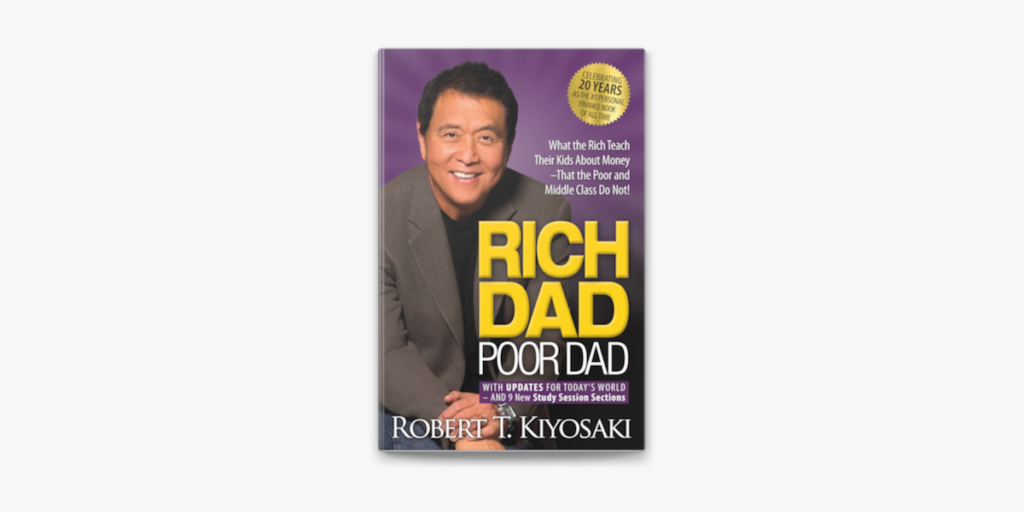
Title: Rich Dad Poor Dad
Author: Robert Kiyosaki
Category: Personal Finance / Business & Entrepreneurship
Why I Picked This Book:
This is one of those books everyone references but few actually read carefully. I wanted to understand the foundational principles that shaped a generation’s thinking about money, assets, and financial independence. I’m tired of the “work hard, save money, retire at 65 narrative that clearly isn’t working for most people, and I needed a different mental model for building wealth.
Core Ideas & Highlights
1. The Rich Don’t Work for Money, Money Works for Them
The poor and middle class trade time for money through jobs. The rich build and buy assets that generate income without their direct involvement. A job is a short-term solution to a long-term problem. “People’s lives are forever controlled by two emotions: fear and greed.” Fear of being without money drives us to work, then greed makes us dream about what money can buy, creating an endless cycle. The real solution isn’t working harder; it’s mastering money so it works for you.
2. Assets vs. Liabilities: The Only Rule That Matters
An asset puts money in your pocket. A liability takes money out. This sounds simple, but most people think their house, car, or expensive possessions are assets when they’re actually liabilities draining cash flow. True assets include businesses that don’t require your presence, stocks, bonds, income-generating real estate, royalties, and intellectual property. “Rich people acquire assets; the poor and middle class acquire liabilities that they think are assets.” If you want to be wealthy, spend your life buying and building assets.
3. Financial Literacy is More Important Than Income
“It is not how much money you make; it is how much money you keep.” Financial intelligence consists of four areas: accounting (understanding financial statements), investing (making money work for you), understanding markets (supply and demand), and the law (using corporations for tax advantages and asset protection). Money without financial intelligence disappears quickly. The wealthy focus on education about money, while the poor focus only on earning money.
4. Mind Your Own Business: Focus on Your Asset Column
Most people confuse their profession with their business. Your profession is your job (what pays the bills); your business is your asset column (what builds wealth). Financial struggle comes from working all your life for someone else, making your employer rich, making the government rich through taxes, making the bank rich through mortgage and debt payments. Keep your day job if you need it, but start building real assets on the side.
5. The Rich Use Corporations to Minimize Taxes Legally
The biggest secret of the rich is using corporate structures to their advantage. Employees earn, get taxed, then spend what’s left. Business owners earn, spend, then get taxed on what’s left. This difference is enormous over time. Corporations provide tax advantages and protection from lawsuits. Understanding corporate law isn’t just for business owners, it’s essential financial intelligence for anyone building wealth.
6. Financial Intelligence Creates Opportunities
“Great opportunities are not seen with your eyes; they are seen with your mind.” The more you develop financial intelligence, the more opportunities appear. There are two types of investors: those who buy packaged investments (mutual funds, index funds) and those who create investments (finding undervalued properties, building businesses, structuring deals). To become the second type, you need three skills: finding opportunities others miss, raising money, and organizing smart people.
7. Work to Learn, Not to Earn
“Job security meant everything to my educated dad; learning meant everything to my rich dad.” The most valuable thing you can extract from a job isn’t the paycheck, it’s the skills. Most educated people are “one skill away from great wealth.” That skill is usually sales and marketing. The ability to sell, communicate, negotiate, and handle rejection is more valuable than technical expertise. Specialists make good employees; generalists with diverse skills become wealthy entrepreneurs.
8. Your Greatest Asset is Your Mind
Ideas and agreements create wealth. Money is just an idea, if you want more of it, change your thinking. The single most powerful asset you have is your brain and the asset column it can fill. Invest more in financial education than in stocks or real estate. Simulations, and real-world experience teach faster than books alone. “Action always beats inaction.” The most painful part of any journey is deciding to start.
My Reflections & Thinking
What resonated with me
- The asset vs. liability framework is brutal clarity. I’ve been calling things “investments” that are actually cash drains; my car, expensive gadgets, subscriptions. The house I dream of buying? Unless it generates rental income, it’s a liability. This reframe is uncomfortable but liberating.
- “Workers work hard enough to not be fired, and owners pay just enough so that workers won’t quit.” This captures the fundamental misalignment I’ve felt in every job. I’m optimizing for not getting fired, not for building wealth. That’s a losing game.
- Financial intelligence as the real education. I spent years in school learning things I never use, but no one taught me to read a balance sheet, understand cash flow, or structure a business. The education system prepares us to be employees, not owners.
What challenged or changed my perspective
- The cynicism about home ownership. I’ve always viewed buying a house as “the responsible adult thing to do.” Kiyosaki argues it’s often the biggest financial mistake middle-class people make, it ties up capital that could be invested in cash-flowing assets, and it’s a liability disguised as security. That challenges my entire family’s worldview.
- “Fear and greed control people’s lives.” I don’t want to admit this is true for me, but it is. I work because I’m afraid of being broke. I spend because I’m greedy for the lifestyle I see others enjoying. I’ve never stopped to ask: Is there a third option? What if I master money instead of letting emotions drive me?
- The idea that talented people stay poor because they focus on perfecting one skill. I’ve always believed in specialization become the best at one thing. But Kiyosaki says wealth comes from knowing “a little about a lot.” Sales, accounting, systems, people management, marketing—the synergy of multiple competencies creates leverage that specialization can’t.
Final Note
This book didn’t teach me “how to get rich quick.” It gave me a new lens for seeing money: as a tool I can master, not a master I serve. The most powerful idea isn’t about real estate or stocks—it’s about the shift from employee mindset to owner mindset. Employees ask “How can I get a raise?” Owners ask “How can I build an asset that works for me?” That one mental shift changes everything. I’ve spent my entire life being financially illiterate while thinking I was educated. Now I know the difference. The question is: Will I do something about it? Because knowledge without action is just expensive entertainment. And I’m done being entertained. It’s time to build.