
Book Overview
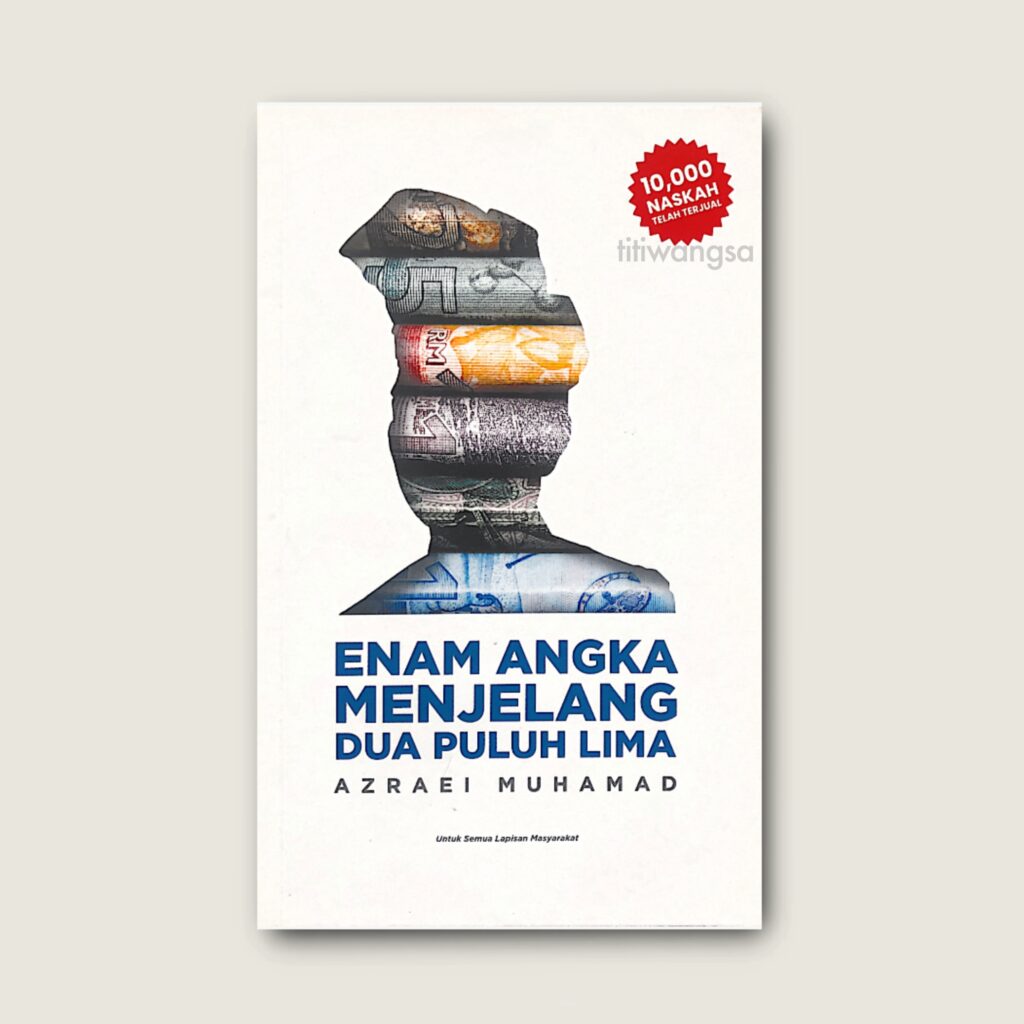
Title: Enam Angka Menjelang Dua Puluh Lima
Author: Azraei Muhamad
Category: Personal Finance
Why I Picked This Book
This is Azraei’s follow-up to Bangsa Enam Angka (you can read my notes here), and I wanted to see how he expanded on his financial framework. I’m at a stage where I’ve grasped the basics of budgeting and saving, but I need guidance on what comes next on how to actually grow wealth while staying grounded in values. The title promised a roadmap for reaching six figures by age 25, which felt both ambitious and practical.
Well I am no longer 25 years old from the moment of my writing, but the guide can help others who are still early in their live to actually walk the author path.
Core Ideas & Highlights
1. Asset Diversification as a Foundation
The book emphasises spreading your wealth across Tabung Haji (TH), ASB, and physical gold for long-term stability. It’s not about chasing the highest returns—it’s about building a balanced portfolio that can weather different economic conditions. Physical gold, in particular, serves as a hedge against inflation and currency devaluation. This isn’t speculative trading; it’s strategic protection.
2. The Five-Category Budget Framework
Instead of the typical needs/wants split, Azraei proposes dividing income into five intentional categories: living expenses (30%), networking/business, learning, travel, and investment. This reframes budgeting from restriction to purposeful allocation. Every ringgit has a mission—whether it’s building relationships, expanding knowledge, creating memories, or generating future wealth.
3. Your Greatest Investment is Yourself
The author identifies three ways to invest in yourself: takaful insurance (protection), travel (experience and perspective), and education insurance (future capability). This challenges the narrow view that investment only means stocks or property. Protecting your health, broadening your worldview, and continuously learning are all wealth-building activities because they compound over a lifetime.
4. Expense Tracking is the Foundation of Everything
You can’t manage what you don’t measure. Azraei breaks down expense management into four practical steps: create a budget, allocate specifically for food (often the biggest leak), maintain a daily expense account, and consider fasting Mondays and Thursdays (for muslim practitioner). The last point is brilliant, it combines spiritual practice with financial discipline, turning worship into wealth-building.
5. Savings Only Exist When You Have the Right Spending Structure
This flips the conventional wisdom. Most people think: “I’ll save whatever’s left.” Azraei says: “Fix your spending structure first, then savings will naturally appear.” It’s the difference between hoping for leftovers and engineering a system that guarantees them. Structure creates surplus; chaos creates excuses.
6. Don’t Trust Cash—Not Even Yourself
This point continue from the previous one. The book warns against trusting cash in your hands or your own willpower. Money that’s accessible will be spent. The solution? Automate separation: savings and investment first, spending second. This isn’t about distrust—it’s about designing around human psychology. Willpower is a finite resource; systems are not.
7. Strategic Shopping: Buy in Bulk, Buy First Enjoy Later
Understand sale cycles and plan purchases around discounts. The “buy in bulk” concept saves money over time, while “buy first enjoy later” means acquiring items during sales even if you don’t need them immediately—as long as they’re planned expenses. This requires discipline to avoid lifestyle creep disguised as “smart shopping.”
8. Spiritual Practices as Wealth Multipliers
Azraei connects financial success to spiritual discipline: perform Dhuha prayer, recite Surah Al-Waqiah, give regular charity, and honor your parents. This isn’t magical thinking—it’s about aligning your actions with principles that foster gratitude, generosity, and long-term thinking. These practices shape character, and character shapes financial outcomes.
9. Zakat as 2.5% Commitment
The book emphasises paying zakat (Islamic wealth tax) at 2.5% as a non-negotiable. This reframes wealth accumulation: you’re not just building for yourself, you’re building capacity to contribute.
10. Stock Market Entry Only After Financial Stability
Don’t touch stocks until you have established savings and a dedicated investment budget. This is a crucial guardrail. Too many people gamble with rent money hoping to get rich. The stock market isn’t a casino—it’s a wealth-building tool for those who’ve already secured their foundation.
My Reflections & Thinking
What resonated with me
- The five-category budget feels liberating, not restrictive. Instead of “don’t spend,” it’s “spend on purpose.” Allocating money for travel and learning gives me permission to invest in experiences without guilt—as long as it’s planned.
What challenged or changed my perspective
- “Don’t trust cash”—including my own discipline. I’ve always prided myself on willpower, but this book called me out. If I’m serious about saving, I need to remove temptation entirely through automation. That’s uncomfortable but necessary.
Final Note
This book reminded me that wealth-building isn’t just about spreadsheets and investment portfolios—it’s about integrating faith, discipline, and intentionality into every ringgit I earn and spend. The path to six figures isn’t a hack or shortcut; it’s a lifestyle redesign. When my spiritual practices align with my spending structure, when my budget reflects my values, when my systems remove reliance on willpower—that’s when transformation happens. The goal isn’t just six figures by 25. It’s becoming the kind of person who can earn, manage, grow, and give with wisdom and purpose.