
Book Overview
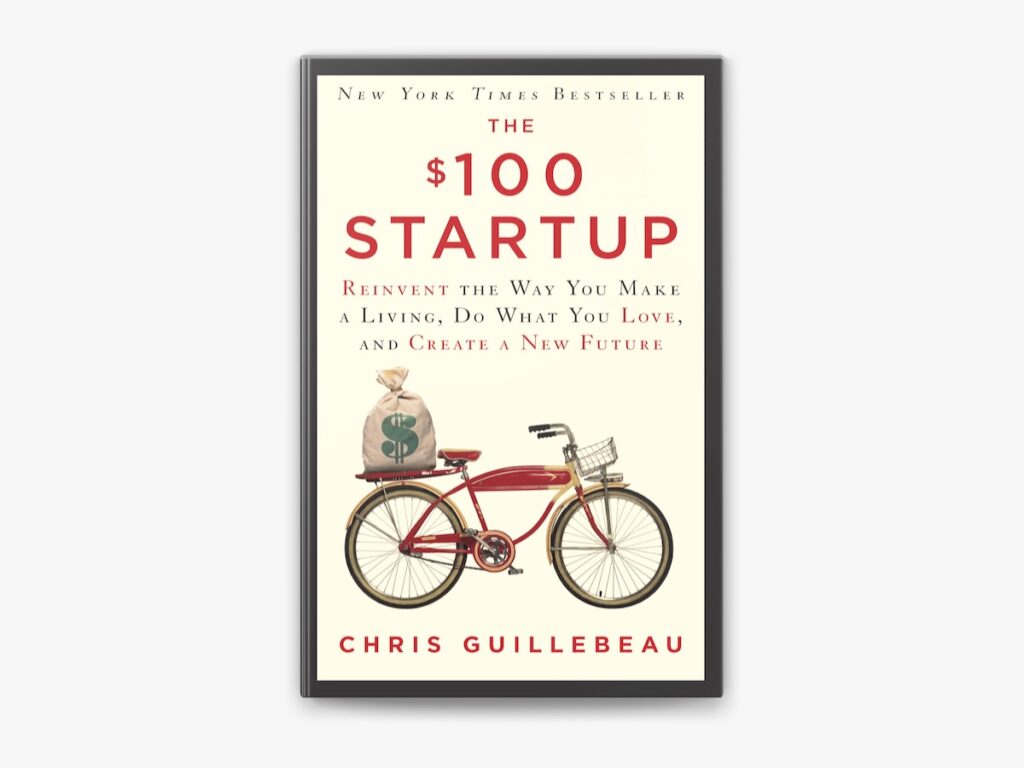
Title: The $100 Startup
Author: Chris Guillebeau
Category: Business & Entrepreneurship
Why I Picked This Book:
I picked this book while rethinking my career path and income model. I wasn’t looking to build a “startup” in the Silicon Valley sense — I wanted something realistic, low-risk, and aligned with family life. This book promised a simpler question: Can you build something useful without burning your life or savings?
Core Ideas & Highlights
1️. You already have more leverage than you think
The core idea of micro-entrepreneurship is simple: you don’t need permission, massive capital, or rare skills to start. You only need skills that are useful to someone else.
Passion + skills + usefulness = success.
That reframing alone removes a lot of mental resistance to starting.
2️. Follow your passion… but don’t ignore reality
Passion alone doesn’t pay bills.
The real formula is:
(Passion + skill) + (problem + marketplace) = opportunity
This grounded my thinking. Passion is fuel, but business sense is the steering wheel.
3️. Build what people already want — then deliver it well
The fastest way to start is not innovation, but usefulness. Find inefficiencies, unmet needs, or people already spending money — and serve them better.
A powerful distinction here:
-
Features are descriptive
-
Benefits are emotional
People buy how something makes them feel, not just what it does.
4️. Keep costs low, get paid early, and focus on profit
This book repeatedly emphasizes discipline:
-
Spend as little as possible
-
Get the first sale fast
-
Market before manufacturing
-
Base prices on benefits, not costs
Profit isn’t the end goal — but without it, there is no business.
5️. Hustling doesn’t mean being loud or salesy
“Hustling” here is quiet, honest, and human.
Make something worth talking about — then talk about it.
Start with people you already know. Not to sell, but to invite them to participate. This reframed promotion as service, not self-promotion.
6️. Small tweaks beat big overhauls
Growth doesn’t always require a new product. Often it’s:
-
Better conversion
-
Slightly higher pricing
-
Selling more to existing customers
-
Adding a simple upsell or service layer
Momentum comes from action, not perfect strategy.
7️. Build a business that fits your life, not someone else’s
One of the most underrated ideas in the book.
Some people want freedom and simplicity. Others want scale and teams.
There’s no universal “right” model — only what aligns with your values, family priorities, and vision of freedom.
My Reflections & Thinking
What resonated with me
-
You don’t need to escape your job overnight to become an entrepreneur
-
Small, useful businesses are more realistic — especially with family responsibilities
-
Skills compound when you apply them to real problems
What challenged or changed my perspective
-
I used to believe I needed clarity first, then action
-
This book challenged that — action creates clarity
-
I also felt uncomfortable realizing how often I over-optimize instead of shipping
Final Note
This book didn’t make me want to hustle harder.
It made me want to build simpler, smarter, and more intentionally.
As a family-first man, I don’t need a billion-dollar dream.
I need meaningful work, honest income, and enough margin to be present where it matters most.