Book Overview
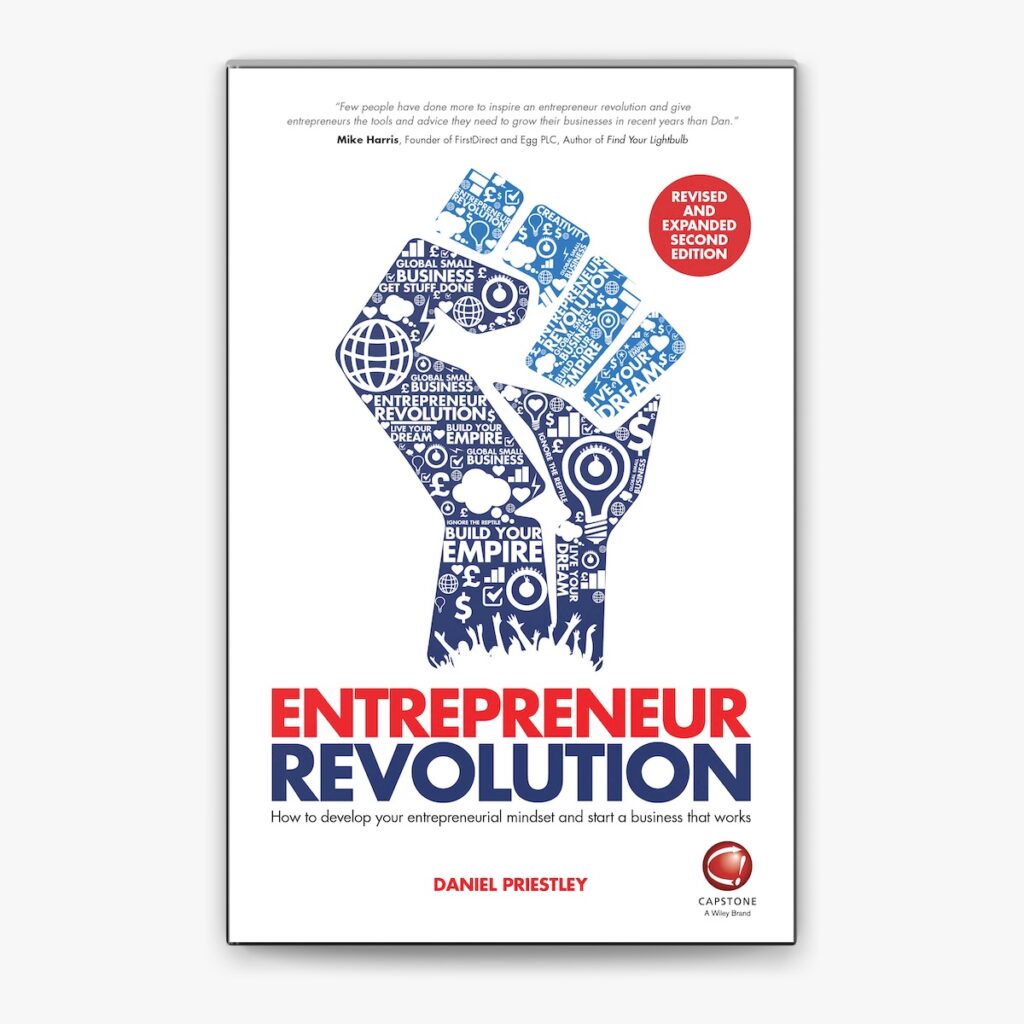
Title: Entrepreneur Revolution
Author: Daniel Priestley
Category: Business & Entrepreneurship / Self Development
Why I Picked This Book:
I’m caught between the Industrial Revolution mindset of job security and the emerging reality of a project-based economy. I see the old system crumbling but don’t fully understand what’s replacing it or how to position myself. This book promised a roadmap for thriving in the “Entrepreneur Revolution”, not just surviving, but building a global small business (gsb) that creates value and freedom. I needed clarity on what entrepreneurship actually means and how to make the transition.
Core Ideas & Highlights
1. The Entrepreneur Revolution is Here And It’s Not Optional
An entrepreneur is someone who makes valuable things happen and takes full responsibility for their success or failure. The Industrial Revolution era of working forty years for one company with a pension is dead. We’re now in the age of Global Small Businesses (GSBs); nimble, tech-enabled companies built around a few Key Persons of Influence (KPIs). The tools are unprecedented: smartphones, cloud computing, AI, social influence, cheap travel, crowdfunding, automation, DNA sequencing, 3D printing. The infrastructure for building a global business from your laptop already exists. The only question is: will you use it?
2. There’s No Payday, There’s Just Life
People who thrive in the Entrepreneur Revolution don’t “work hard” in the traditional sense. They create, get stuff done, make things happen, organize change, drive projects, engineer results. The stress isn’t from repetitive labor, it’s from solving new, complex problems that require new levels of creativity. This is fundamentally different from Industrial Revolution work. “There is no pay day, there is just life.” You’re not grinding to Friday. You’re building something that compounds daily.
3. The Three Brains: Reptile, Monkey, Entrepreneur
Your brain has three parts. The Reptile is highly emotional in a bad way, driven by fear and survival instincts. The Monkey is practical but not emotionally intelligent, good at repetitive tasks, bad at vision. The Entrepreneur is emotionally intelligent, believes in its ability to influence, and sees opportunities. To keep workers as workers, two things must happen: convince them they’re able to survive (barely), and keep them occupied with tasks or entertainment at all times. When you tune out the noise, you access your inner entrepreneur. You tap into ideas that could help thousands and discover resources you barely knew existed.
4. Access Your Inner Entrepreneur: Three Convictions
To awaken your entrepreneurial brain, convince yourself of three things: (1) You do not need anything. You’re not desperate. (2) You are not required to perform repetitive and meaningless tasks to survive. Your value isn’t tied to compliance. (3) You are here to transform the world for the better, serve others, and experience the rewards that come from inspired acts of service. This isn’t naive idealism, it’s the foundation of value creation.
5. The 10 Challenges to Wake Up Your Entrepreneurial Brain
Priestley provides concrete challenges: (1) Make 3 calls to people who will advance your idea or tell you why it won’t work. (2) Get your monkey a bank account—save 10% of everything you earn. (3) Stop spending time with people who bring you down. Find mentors. (4) Carry MYR1000 cash at all times. (5) Take someone new to lunch every week. (6) Tune out from the news. (7) Keep a journal. (8) Plan your holidays first. (9) Get structured; hire an accountant and lawyer. (10) Build an entrepreneurial team: designer, salesperson, all-rounder, technician, mentor. These aren’t theoretical, they’re action steps.
6. Lean In: Seven Hard Truths of Entrepreneurship
Leaning in means showing up with your game face on, committing to excellence, pursuing your vision, loving your team, caring about details. It’s about wishing to be better, not wishing things were easier. The seven hard truths: (1) It’s hard and gets harder. (2) No one is coming to save you. (3) To do the work you love, you must win the work. (4) Things don’t work for long. (5) You’re going to fail. (6) It’s unfair. (7) You’re not entitled to rewards. Accept these truths or stay stuck.
7. The Essence of Success: Luck, Reputation, Vitality
Luck can be influenced. Show up in luckier places, spend time with luckier people, learn ideas that produce luck, get crystal clear on your vision, have lucky conversations. Reputation is a powerful multiplier of luck. Build it through the 5 KPI strategies: Pitch, Publish, Products, Profile, Partnership. Vitality is your irreplaceable life force. Your goal is to move to higher levels of irreplaceability; the more unique and valuable you become, the more the world needs you.
8. The Entrepreneur Sweet Spot: Passion + Skill + Profit
Three ingredients define the sweet spot: (1) Do something you’re passionate about. Identify your underlying theme; it’s been showing up since childhood. (2) Do something you’re good at. Your intellectual property (IP) is your special method, philosophy, recipes for success, brands, culture. Find it by writing: mistakes people make, valuable ideas, maxims to live by, case studies, white papers, books. (3) Do something that makes money. Income comes from products or services. Use the CAOS principles: Concept, Audience, Offer, Sales. Launch quickly and cheaply.
9. The Ascending Transaction Model (ATM): Your Product Strategy
Great businesses have four types of products: (1) Gifts; free, meaningful, well-timed stuff that doesn’t bankrupt you. (2) Products for Prospects (PFP); prototypes or beta versions to get your ideas out, capture contact details, get quick wins. (3) Core Offering; your main product/premium package. A remarkable solution focused on implementation, priced right. (4) Products for Clients (PFC); recurring revenue that’s highly profitable, different, logical. Three pieces of glue hold this together: lead-capture process, sales conversations, servicing process.
10. The Seven-Stage Journey
The path from employee to impact: (1) The Newbie (work). (2) The Worker (work). (3) Self-Employed (work). (4) Key Person of Influence (play). (5) Campaign-Driven Enterprise (play). (6) Global Small Business (play). (7) Making A Difference Enterprise (MADE). The shift from work to play happens at stage 4. To move forward, you need three ingredients: willingness to stretch, willingness to get resourceful, willingness to be held accountable.
My Reflections & Thinking
What resonated with me
-
“There is no payday, there is just life.” This reframes everything. I’ve been thinking in terms of Friday paydays and retirement endpoints. But if I build something that compounds daily, the distinction between “work” and “life” dissolves. That’s simultaneously liberating and terrifying.
-
The three brains framework cuts deep. I recognize my Reptile (fear of running out of money) and my Monkey (good at tasks, bad at vision). My Entrepreneur brain rarely gets airtime because I’m constantly occupied with noise; news, social media, busywork. Tuning out isn’t lazy; it’s strategic.
-
The ATM product strategy is brilliant in its simplicity. I’ve been trying to build one perfect product. Priestley says: have gifts (to attract), products for prospects (to convert), core offering (to deliver value), products for clients (to retain). This is a system, not a gamble.
What challenged or changed my perspective
-
“You do not need anything.” This flies in the face of everything I’ve been conditioned to believe. My Reptile brain screams: “You need security, a salary, health insurance, a safety net!” But Priestley argues this neediness is exactly what keeps me enslaved. If I genuinely believed I didn’t need anything, I’d act from abundance, not scarcity. That’s uncomfortable.
-
The four product strategies that don’t work for small businesses: Only One Product (brand-dependent), J-curve (capital-dependent), One-Stop Shop (system-dependent), Brokerage (time-dependent). I’ve been trying to build a brokerage model thinking it’s smart. Priestley calls it a trap. Ouch.
-
“Ideas are worthless, implementation is everything.” I have notebooks full of “brilliant” ideas I’ve never executed. This book is a mirror: stop hoarding ideas, start shipping products. The market doesn’t reward thinkers, it rewards doers.
Who Should Read This
This book is for anyone stuck in the Industrial Revolution thinking who senses the world has changed but doesn’t know how to adapt. It’s for employees who feel the job-security myth crumbling beneath them. It’s for freelancers and self-employed people who are maxed out trading time for money and want to scale. It’s for early-stage entrepreneurs who have a product but no strategy. And it’s for anyone who wants to build a Global Small Business; a lean, tech-enabled company that generates impact and freedom without requiring venture capital or a massive team. If you’re ready to wake up your Entrepreneur brain, this is the playbook.
Final Note
This book didn’t teach me “how to get rich quick.” It taught me how to think like an entrepreneur in an era where entrepreneurship is no longer optional. The Industrial Revolution promised: work hard for forty years, get a pension, retire. That deal is dead. The Entrepreneur Revolution says: build assets, create value, serve others, take full responsibility for your results. The tools exist. The infrastructure is free or cheap. The only question is whether I’ll access my inner Entrepreneur or let my Reptile and Monkey keep me occupied with noise. Priestley’s framework; the ATM product strategy, the seven-stage journey, the sweet spot of passion + skill + profit, gives me a map. But a map is useless if I don’t move. So the real question isn’t “Do I understand this?” It’s “Will I implement this?” Because ideas are worthless. Implementation is everything. And I’m done being a spectator in my own life.